
The Ultimate Guide to Cleaning Mold with Vinegar
- Esther Oside
You spot dark patches creeping along your shower grout. Or maybe it’s that musty smell near your washing machine that gives it away.
Mold in your home isn’t just ugly — it’s a real health threat. It can trigger asthma attacks, worsen allergies, and cause serious respiratory issues, especially for kids and the elderly.
The good news? You probably already have the most effective mold killer sitting in your kitchen cabinet: plain white vinegar.
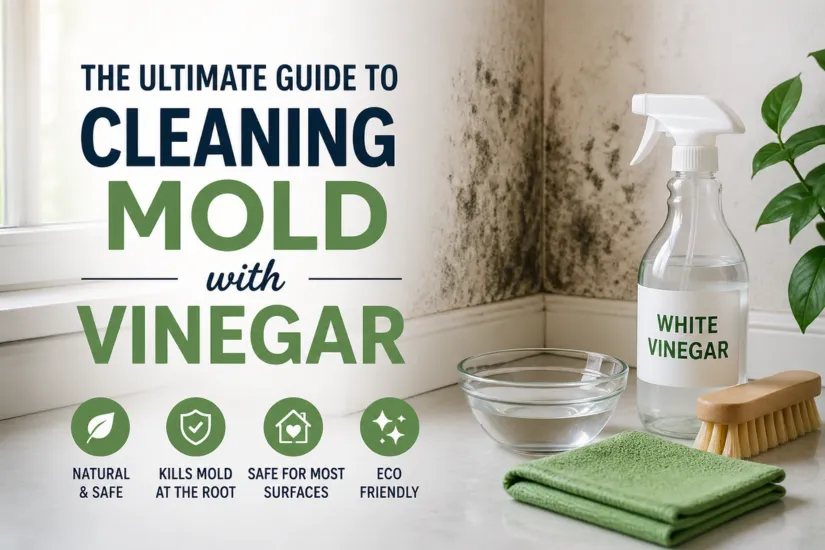
Why White Vinegar Kills Mold Better Than Bleach
Most people reach for bleach. But bleach only kills surface mold — it doesn’t penetrate porous surfaces where mold roots grow.
White vinegar is a mild acid that kills over 80% of mold species, including hazardous black mold. It soaks into the surface, kills mold at the root, and stops it from coming back.
Bleach vs. Vinegar — Quick Comparison:
White Vinegar vs Bleach for mold removal comparison table
| Feature | White Vinegar Natural acid cleaner | Bleach Sodium hypochlorite |
|---|---|---|
| Kills surface mold | Yes | Yes |
| Kills mold at the root | Yes | No |
| Safe on most surfaces | Yes | Can damage |
| Eco-friendly | Yes | No |
| Prevents regrowth | Yes | No |
Note: Vinegar wins every time for everyday mold removal.
5 Easy Steps for Clean Mold with Vinegar
Don’t skip the prep. Having everything ready makes the job faster — and safer.
Supplies checklist:
- Undiluted white distilled vinegar (5% acidity)
- Empty spray bottle
- Baking soda
- Scrub brush or stiff scouring pad
- Non-porous rubber gloves
- Safety goggles or glasses
- N95 mask or respirator
Important: Use vinegar undiluted. Mixing it with water weakens its effectiveness. Pour it straight into the spray bottle — no mixing needed.
Step 1: Protect Yourself First
Mold spores become airborne when disturbed. Direct contact can irritate your skin, eyes, and lungs — even with non-toxic mold.
Put on your gloves, goggles, and mask before touching anything. This is non-negotiable, especially if you’re dealing with a larger patch or black mold.
Step 2: Spray Vinegar Directly on the Mold
Fill your spray bottle with undiluted white vinegar. Saturate the moldy area completely — don’t be shy with it.
Let it sit for at least 60 minutes. Do not scrub. Do not rinse. The vinegar needs time to penetrate and kill the mold from the inside out.
Pro tip: For stubborn or heavy mold, let the vinegar sit for 2 hours before moving to the next step.
Step 3: Mix a Baking Soda Scrub
After the vinegar has soaked in, it’s time to scrub. Mix this simple solution in a spray bottle:
- 1 teaspoon baking soda
- 2 cups of warm water
Shake well until fully dissolved. Baking soda acts as a gentle abrasive — it lifts mold residue and neutralizes any lingering odor.
Step 4: Scrub and Rinse
Spray the baking soda solution directly onto the area. Scrub firmly with your brush or scouring pad — work in small circles to dislodge mold stains.
Rinse the area with clean, warm water once the stains lift. Keep your gloves and mask on during this step — scrubbing releases spores into the air.
Step 5: Final Vinegar Spray
This step is the one most people skip — and it’s the one that matters most for prevention.
Once the area is scrubbed and rinsed, give it one final spray of white vinegar. Let it air dry completely — don’t wipe it off.
This last application kills any remaining spores and creates a protective barrier that discourages mold from returning. The vinegar smell will fade within a few hours.
How to Prevent Mold From Coming Back
Killing existing mold is step one. Keeping it from returning is step two.
Simple prevention habits that work:
- After every shower: mist your shower walls with vinegar. Let it air dry.
- In the laundry room: add ½ cup of vinegar to your mop water when cleaning floors.
- Run your bathroom exhaust fan for at least 15–20 minutes after showers.
- Open windows when cooking or bathing to reduce humidity.
- Keep indoor humidity below 50%: a simple hygrometer (under $15) helps you monitor this.
Mold needs three things to grow: moisture, warmth, and darkness. Cut off the moisture — you cut off the mold.
When Vinegar Isn't Enough — Call Essy Cleaning
Vinegar is a powerful tool for small, surface-level mold patches (think: shower grout, bathroom tile, around faucets).
But there are situations where DIY isn’t safe or effective:
- The mold covers more than 10 square feet
- You can smell mold but can’t find the source
- Mold keeps returning after repeated cleaning
- You suspect mold inside your walls, ceiling, or HVAC system
- Anyone in your home has respiratory conditions or compromised immunity
In these cases, don’t risk it — call the pros. Attempting to clean a large mold infestation yourself can spread spores throughout your home and make the problem significantly worse.
That’s where Essy Cleaning comes in. Our trained technicians handle mold problems of every size — safely, thoroughly, and fast. We use professional-grade solutions that eliminate mold at the root and protect your home from future growth.
- Certified mold removal specialists who know exactly what they’re doing
- Safe, eco-friendly methods that are tough on mold but gentle on your home
- Fast response times — we come to you, on your schedule
- 100% satisfaction guaranteed — we don’t leave until the job is done right
Don’t let mold put your family’s health at risk. Call Essy Cleaning today for a free assessment and let us handle the hard part.
FAQs About Mold Cleaning with Vinegar
Does white vinegar kill black mold?
Yes. White vinegar kills most mold species, including black mold (Stachybotrys chartarum). For large black mold infestations, however, professional remediation is always the safest option.
Does vinegar need to be diluted to kill mold?
No — use it undiluted at full strength. Diluting vinegar reduces its acidity and makes it far less effective against mold.
How long does vinegar take to kill mold?
Let the vinegar sit for at least 60 minutes before scrubbing. For thick or heavily embedded mold, 2 hours is better.
Can I use apple cider vinegar instead of white vinegar?
White distilled vinegar is the best choice. Apple cider vinegar can work, but it may stain light-colored surfaces and has a stronger lingering odor.
Will vinegar damage my grout or caulk?
White vinegar is generally safe on tile grout and caulk. Avoid using it on natural stone tiles, as the acid can etch and dull the surface permanently.
How often should I spray vinegar to prevent mold?
A light mist after every shower or a weekly spray in high-humidity areas is plenty. You don’t need to drench the surfaces — a fine mist is enough.
What if the mold stain won't come off after cleaning?
The mold may be killed even if the stain remains. Try a paste of baking soda and hydrogen peroxide (3%) for stubborn staining. If the stain persists, the surface material may need to be replaced.
The Bottom Line
White vinegar is one of the safest, most effective, and most affordable ways to tackle household mold. It outperforms bleach, it’s non-toxic, and it’s already in most kitchens.
Follow the five steps above, stay consistent with prevention, and your bathroom, laundry room, and kitchen will stay mold-free longer.
Need professional help with a bigger mold problem? Don’t wait — mold spreads fast. Contact a local cleaning or restoration expert for a free assessment before a small patch turns into a major project.